
Plot Schmott; Make it Flow, Kurt, Make it Flow
Plot is overrated; narrative flow is where it's at

Before I get to today’s post, the big news is I have a new book out this week. The Rainseekers is about a former social media influencer who is hired by a magazine to document the adventure of a group of people hoping to feel the first rain on Mars.
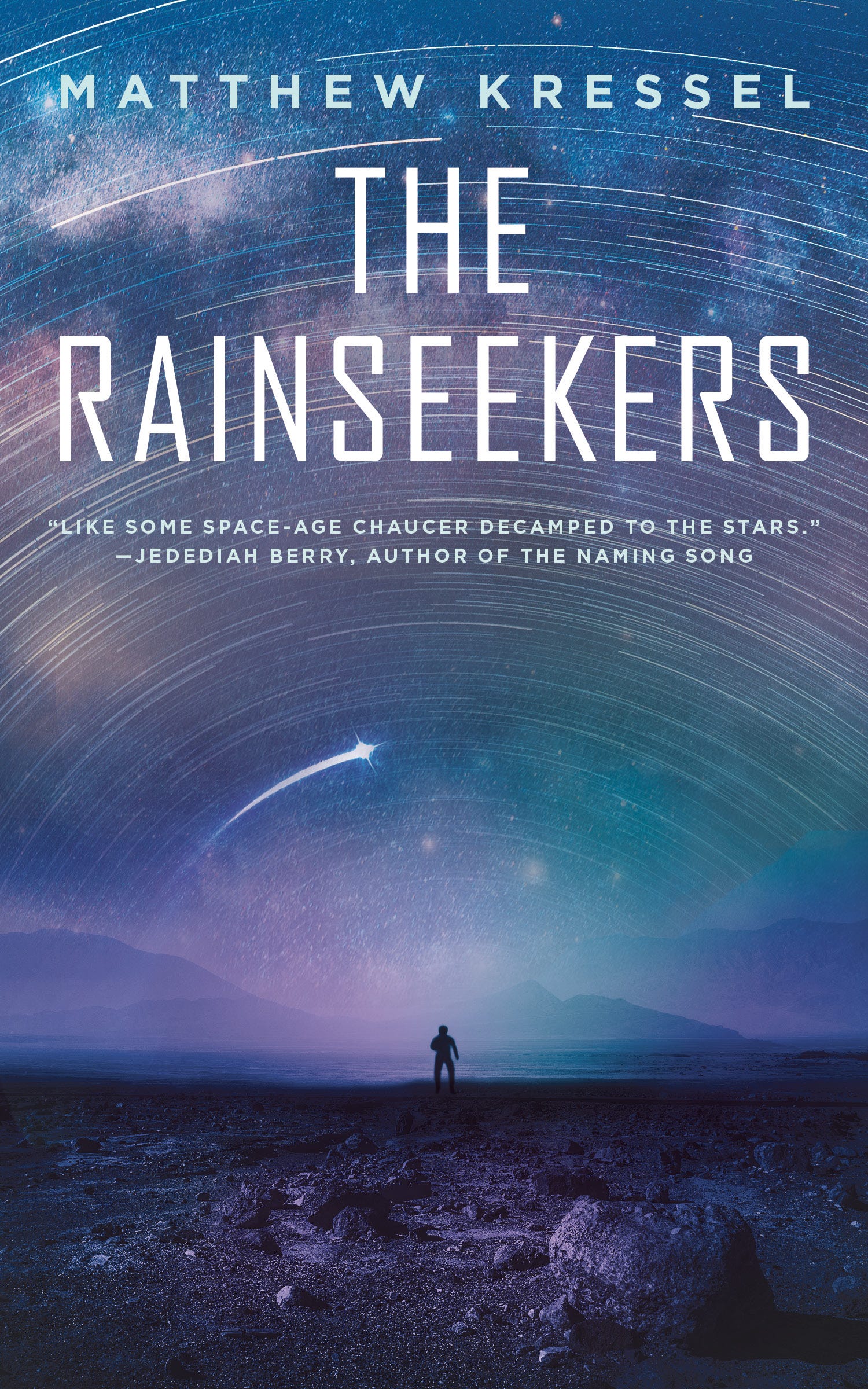
The Rainseekers has been getting some great reviews, including this massive blurb from Veronica Roth:
“A vivid, poignant, and compassionate story about our desperate search for meaning...whether on Earth or far beyond it.” —Veronica Roth, New York Times bestselling author of the Divergent series.
And here’s some more reviews:
“This story reminds me why I read science fiction.” —Sarah Pinsker, Nebula and Hugo Award-winning author of A Song For A New Day and Lost Places
“Kressel’s writing is simple yet rich, unspooling a vast breadth of storytelling in a small and compact package that will tug at readers’ heartstrings by book’s end.” —Booklist
“Lovely and poetic….This is an enjoyable and very human companion piece to terraforming classics such as Kim Stanley Robinson’s Red Mars trilogy.” —New Scientist
“Wonderfully clear and evocative writing. I’d read more SF if there was more like this.” —Jeffrey Ford, author of A Natural History of Hell and Ahab's Return
“A story that speaks to our fractured time, and leaves us with both catharsis and hope. I too would risk everything to see the first rainfall on Mars. A lovely piece of work.” —Nathan Ballingrud, author of The Strange
So if you are enjoying this newsletter, you can support me by getting a copy of The Rainseekers at your favorite bookstore!
Okay, now onto today’s topic: making it flow.
Many years ago I was at the World Fantasy Convention, attending a party with Jeffrey Ford and Robert Shearman and a bunch of other folks. Jeff and I got to talking, and Jeff said, “Lucius Shepard once told me, ‘If you can make shit flow, you can get away with anything.’”
Though we were well into our cups, his comment has stuck with me. I’ve heard authors describe good writing as “musical,” with a cadence and harmony. In John Gardner’s On Becoming A Novelist he talks about something he terms the “fictive dream.” By this he is referring to the kind of dream state you get into when absorbed in a good book, film, or TV show. We’ve all experienced it one way or another. The novelist’s task, Gardner says, is to keep the reader immersed in that dream. Any deviation from this fictive dream will throw the reader out of the story. They will become bored or distracted or frustrated. They will say, “I didn’t like the story,” or, “the book didn’t work for me,” though they may not be able to elaborate exactly why.
For me, Jeffrey Ford’s short stories have been able to pull me into that fictive dream in ways few other authors have, and it’s probably no coincidence that he once studied under John Gardner. Their plots are usually not “traditional” in that they don’t follow common plot arcs. Instead, they seem to follow Jeff’s imagination where it leads.
When I took this advice to “make it flow” to heart is also when my stories started to “level up” as an author. But what does “flow” mean exactly?
To get an intuitive feel for flow, I find it helpful to read my work aloud. Are there a lot of awkward pauses? Are there words that I stumble over? Would that five-syllable word be better replaced by one with two? Do the sentences seamlessly flow from one to the next? Am I constantly forcing the reader to pivot, to reorient, to adjust? Challenging the reader is good, but too much and you risk alienating them.
In a lot of writing books and classes they will harp over and over again on “plot.” There is a certain school of writing that focuses on churning out as many words as possible, following a “plot by numbers” approach. And one of the most common plot tropes is the “monomyth” or Hero’s Journey detailed by Joseph Campbell. You see it played out in Lord of the Rings and Star Wars and so many other stories. And that’s fine if that’s your deal, and many great books and stories follow its contours. But the thing is we now have a new villain to contend with, and his name is AI.
AIs, or more specifically LLMs, are trained (often illegally) on the works of prior authors, and since the monomyth is so common in fiction, the LLM, because it’s programmed to spit out the “expected” content, will more often than not spit out some weak simulacrum of a monomyth story.
I’m not even going to get into the ethics of using AI. Those who know me know I’m strongly against its use in the arts for various reasons. But the problem we now face is that any doofus with internet access can now prompt their plagiarism machine du jour to spit out some “story,” and whether we like it or not, there will be lots more of AI-generated stories in the future.
And so to stand out from that soulless dreck and beaten-to-death tropes we have to be unique, we have to let our irrational, beautiful, unpredictable voice free. To rise above the noise you have to be profoundly human. This, to me, is why character is so much more important than plot. I love a good plot. Intricately structured narratives can be a real joy. But for me, people and their stories are the real heart of any story.
In life, things don’t often fit into neat little pockets of beginnings, middles, ends. Unexpected things happen, and this is what makes life painful but also beautiful. Things ebb and flow according to no predetermined whim, but according to the vagaries of nature. Flow then, especially narrative flow, is being open to these unexpected pains and delights. It’s allowing the work to lead you down into Hades and through the twisted psyche of your experience and then wrenching and tearing that feeling out from its depths and putting it on the page. By opening ourselves up to this flow we open ourselves up to being human.
If you like these posts and you would like to support my writing, please consider buying one or more of my books. My novella The Rainseekers is out now.
The Rainseekers - “A vivid, poignant, and compassionate story about our desperate search for meaning...whether on Earth or far beyond it.” —Veronica Roth, New York Times bestselling author of the Divergent series
Space Trucker Jess - “A page-turning adventure set in an inventive universe” –Publishers Weekly
Histories Within Us - 2025 Locus Recommended Reading List, “A dazzling collection” –A.C. Wise
Dispatches from the Outer Deep - A Guide to Writing, Editing, Submitting, and Publishing Long and Short Fiction.
Dennis Foley lectured repeatedly that to succeed, a story must be "profluent", must feel like it's going somewhere, not wandering aimlessly or worse after the dust clears, nothing has really changed. If the reader feels there is a journey, he will stick to it to journey's end.
Mr. Foley's profluence and your flow are the same thing.
It's the difference between floating down a river, seeing unexpected landscapes and being stuck on a sandbar.
Your story telling about how you learned flow is essential made the lesson easier to remember. Thank you.